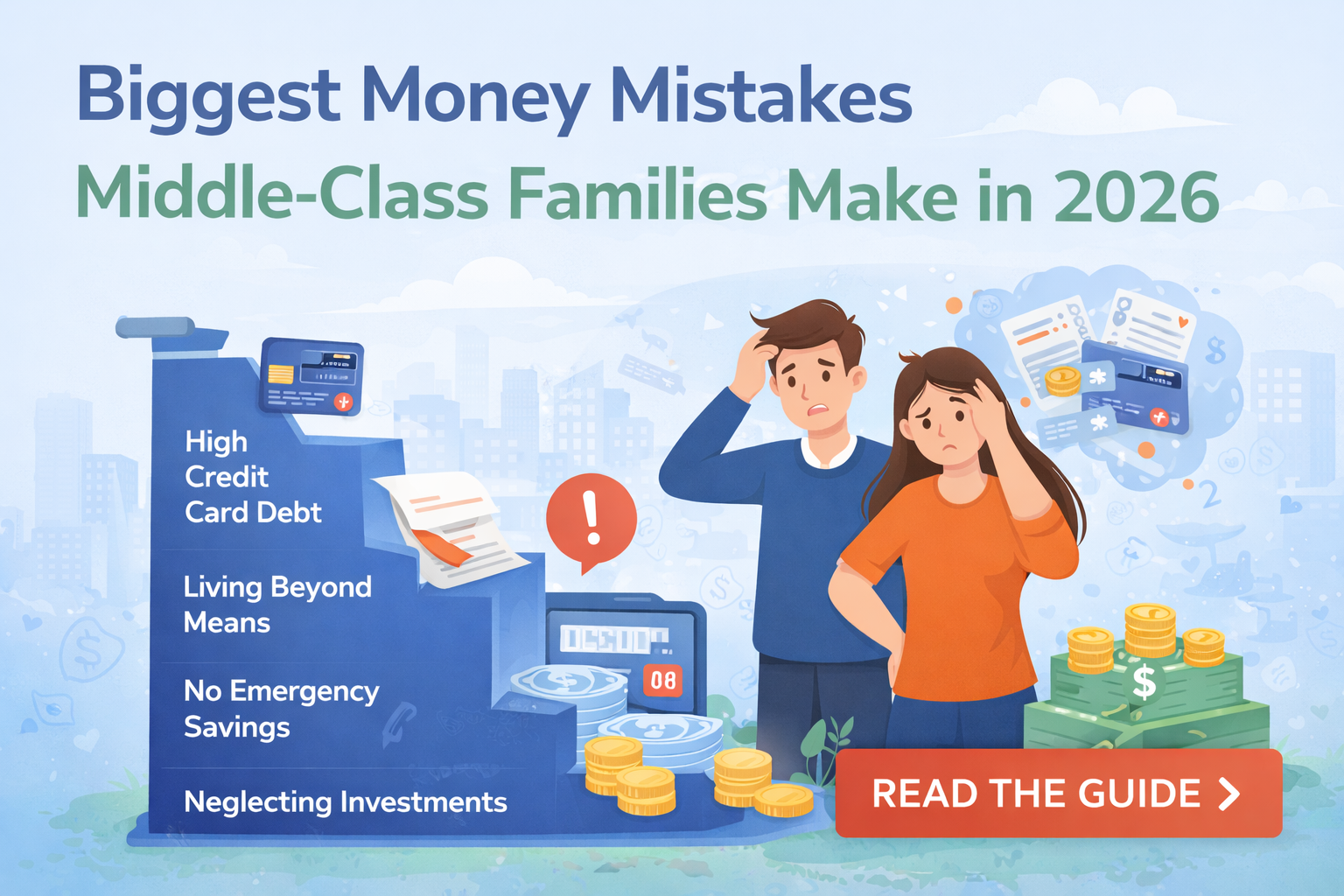
Introduction: Why Middle-Class Families Are Under the Most Financial Pressure in 2026
In this guide, we’ll break down the biggest money mistakes middle-class families make and how to avoid them step-by-step.
The middle class has always been considered the backbone of modern economies. In Tier-1 countries—such as the United States, United Kingdom, Canada, Australia, and Western Europe—the middle class historically enjoyed stability, upward mobility, homeownership, retirement security, and predictable financial progress.
But in 2026, that reality has fundamentally changed.
Middle-class families now face:
- Exploding housing costs
- Rising healthcare expenses
- Stagnant wages
- High childcare and education costs
- Inflation reducing purchasing power
- Unstable job markets
At the same time, they often earn too much to qualify for government assistance but not enough to feel financially safe. This creates a dangerous gap—where families appear “successful” on the outside but feel financially fragile on the inside.
Most middle-class households:
- Work full-time.
- Pay their bills.
- Avoid reckless spending.
- Try to save when possible.
Yet emotionally, they live with:
- Constant financial stress.
- Fear of emergencies.
- Anxiety about retirement.
- Guilt around not doing “enough” for their children.
- A feeling of being stuck.
The issue is not laziness, irresponsibility, or lack of intelligence.
The real issue is:
A broken financial system combined with behavioral psychology traps and invisible money mistakes.
This article identifies the biggest financial mistakes middle-class families make—not to shame, but to empower. Each mistake is explained in depth with real-world examples, financial psychology, and clear steps to fix it.
By the end, you will not only understand what is holding you back—but how to build a resilient, secure, and prosperous financial future.
Biggest Money Mistakes Middle-Class Families Make in 2026
The biggest money mistakes middle-class families make include confusing income with wealth, living paycheck to paycheck, overspending on housing and cars, carrying high-interest debt, avoiding investing, and failing to build a financial system. These mistakes prevent long-term wealth creation even for families with stable income.
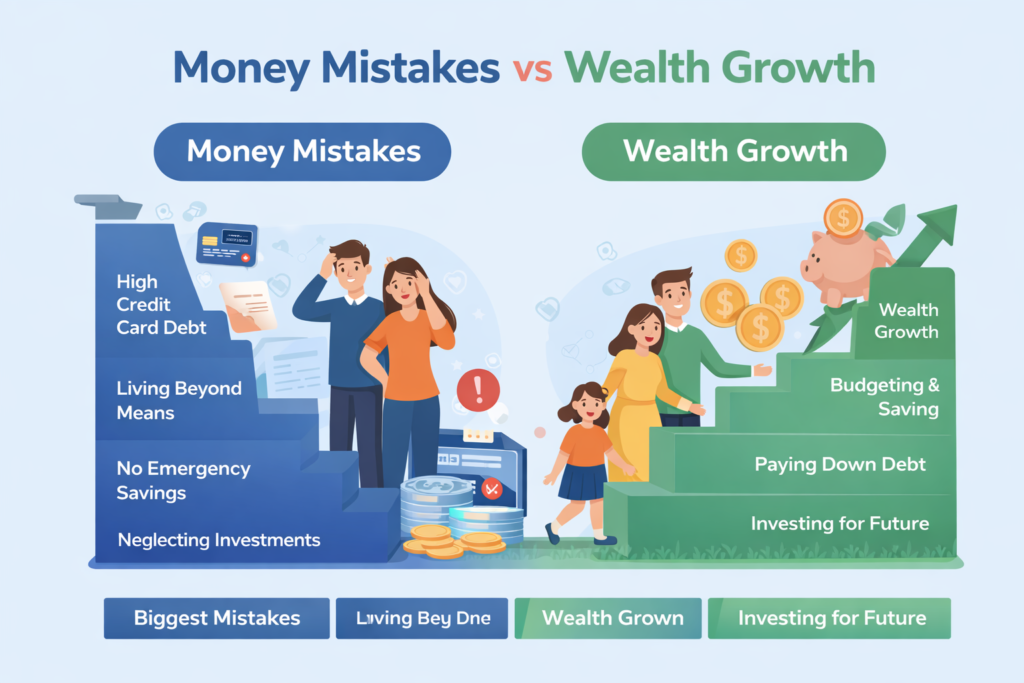
Mistake #1: Biggest Money Mistakes Middle-Class Families Make – Confusing Income With Wealth
❌ The Mistake Explained in Detail
One of the most dangerous financial misconceptions is believing that earning more money automatically leads to wealth.
In reality:
- Income is the money you earn.
- Wealth is the money you keep, invest, and grow over time.
You can have a high income and still be broke.
You can have a modest income and still become wealthy.
One of the biggest money mistakes middle-class families make is assuming higher income automatically leads to wealth.
Many middle-class families fall into the trap of equating salary increases with financial success. But if spending rises at the same pace—or faster—net worth stagnates or declines.
This is known as lifestyle inflation—where higher income leads to higher spending instead of higher saving.

Real-World Example
Let’s compare two families:
Family A
- Income: $150,000/year
- Expenses: $148,000/year
- Savings: $2,000/year
Family B
- Income: $80,000/year
- Expenses: $65,000/year
- Savings: $15,000/year
After 10 years:
- Family A saves $20,000 (before interest).
- Family B saves $150,000 (before investment growth).
Even though Family A earns nearly double, Family B becomes dramatically wealthier.
Psychological Traps Behind This Mistake
- Social comparison: People compare themselves to peers and feel pressure to “upgrade” their lifestyle.
- Marketing manipulation: Advertising convinces consumers that happiness and success come from buying more.
- Delayed gratification failure: Humans prefer immediate pleasure over long-term security.
- Normalization of debt: Borrowing to fund lifestyle has become socially acceptable.
✅ How to Fix It (Step-by-Step)
- Measure wealth, not income. Track your net worth (assets minus liabilities).
- Set a savings rate goal. Aim for at least 20–30% of take-home pay saved or invested.
- Automate wealth building. Have money transferred to savings and investments immediately when you get paid—before you spend anything.
- Increase savings when income rises. Every raise should increase savings, not lifestyle.
Mistake #2: Common Money Mistakes Middle-Class Families Make – Living at the Edge of Their Means
❌ The Mistake Explained in Detail
According to data from the Federal Reserve, a large percentage of households struggle to cover unexpected expenses, highlighting how common financial fragility is. Many middle-class families live financially fragile lives—where almost every dollar earned is already assigned to an expense.
This means:
- No emergency buffer.
- No margin for mistakes.
- No room for opportunity.
- No protection against life shocks.
This condition is often called paycheck-to-paycheck living, even when income appears high.
Real-World Example
A household earns $90,000/year. Monthly expenses include:
- Mortgage/rent
- Two car payments
- Childcare
- Insurance
- Subscriptions
- Groceries
- Dining
- Travel
At the end of the month, they have $200 leftover—not enough to handle a car repair, medical bill, or job loss.
So when:
- The car needs a $1,500 repair
- A child needs emergency dental work
- A job is lost or hours are cut
They turn to credit cards or loans—starting a cycle of debt.
Psychological Traps Behind This Mistake
- Status pressure: Feeling the need to match peers’ lifestyles.
- Emotional spending: Using purchases to cope with stress, boredom, or burnout.
- Optimism bias: Believing “nothing bad will happen to us.”
- Lack of planning: No intentional financial system.
How to Fix It
- Build an emergency fund of 3–6 months of expenses.
- Reduce fixed expenses first—housing, cars, insurance, subscriptions.
- Create financial margin—design your life so that not every dollar is spoken for.
- Live below your means, not at them.
Mistake #3: Costly Financial Mistakes Middle-Class Families Make – Overbuying on Housing
❌ The Mistake Explained in Detail
Housing is often the largest expense for middle-class families—and the most emotionally charged financial decision.
Many families:
- Buy the most expensive home the bank approves.
- Assume rising home values will offset risk.
- Underestimate maintenance, taxes, insurance, and repairs.
- Tie too much of their net worth to a single illiquid asset.
This turns a home—meant to provide stability—into a financial stressor.
Real-World Example
A couple qualifies for a $700,000 mortgage but could comfortably afford $450,000.
They buy the $700,000 home.
Result:
- Monthly payments consume a large portion of income.
- Little left for savings, investments, or emergencies.
- High stress during job uncertainty or economic downturns.
- Increased risk of foreclosure or forced sale.
Psychological Traps Behind This Mistake
- Emotional attachment: People associate homes with identity, success, and family legacy.
- Social signaling: Bigger homes signal status.
- Bank approval illusion: Belief that if a bank approves it, it must be safe.
- Recency bias: Belief that housing always goes up.
How to Fix It
- Keep housing costs to 25–30% of gross income.
- Consider total cost of ownership, not just mortgage payments.
- Choose flexibility and security over prestige.
- Remember: A house is a shelter first, an investment second.
Mistake #4: Financial Mistakes Middle-Class Families Make – Treating Cars as Status Symbols Instead of Tools
❌ The Mistake Explained in Detail
Cars are one of the most financially destructive purchases for middle-class families.
They:
- Depreciate rapidly.
- Require insurance, fuel, maintenance, and repairs.
- Often involve long-term loans.
- Are frequently purchased for emotional or status reasons—not utility.
Real-World Example
A family buys two new vehicles with:
- $850/month total payments
- $10,200/year
- Over 5 years = $51,000 in payments
- Plus depreciation = $70,000+ lost
If that same $850/month were invested at a modest 7% return, it could grow to over $120,000 in 10 years.
Psychological Traps Behind This Mistake
- Advertising glamour: Cars are marketed as symbols of success, freedom, and identity.
- Social pressure: Keeping up with neighbors and coworkers.
- Monthly payment illusion: People focus on payment size rather than total cost.
- Instant gratification bias.
How to Fix It
- Buy reliable used vehicles instead of new.
- Avoid long-term auto loans.
- Pay cash when possible.
- Treat cars as transportation tools, not emotional rewards.
Mistake #5: Biggest Money Mistakes Middle-Class Families Make – Carrying High-Interest Consumer Debt
❌ The Mistake Explained in Detail
High-interest debt—especially credit cards, personal loans, and buy-now-pay-later schemes—is one of the fastest ways to destroy wealth.
This debt compounds against you.
Instead of your money earning interest, your debt grows exponentially.
Real-World Example
- Credit card balance: $10,000
- Interest rate: 24% APR
- Monthly payment: $300
- Time to payoff: 4+ years
- Total interest paid: $4,000+
That’s $4,000 of your future stolen by past spending.
Psychological Traps Behind This Mistake
- Emergency spending without savings.
- Emotional purchases.
- Debt normalization culture.
- Optimism bias: “I’ll pay it off soon.”
How to Fix It
- Use the debt avalanche method—pay highest interest debt first.
- Stop using credit cards until balances are cleared.
- Replace debt with an emergency fund.
- Treat high-interest debt as a financial emergency.
Mistake #6: Biggest Money Mistakes Middle-Class Families Make – Underinvesting Due to Fear or Confusion
❌ The Mistake Explained in Detail
Low-cost index funds offered by firms like Vanguard Group are widely recommended for long-term investors due to their diversification and low fees. Many middle-class families:
- Keep excess cash in low-interest savings.
- Avoid investing due to fear.
- Delay retirement contributions.
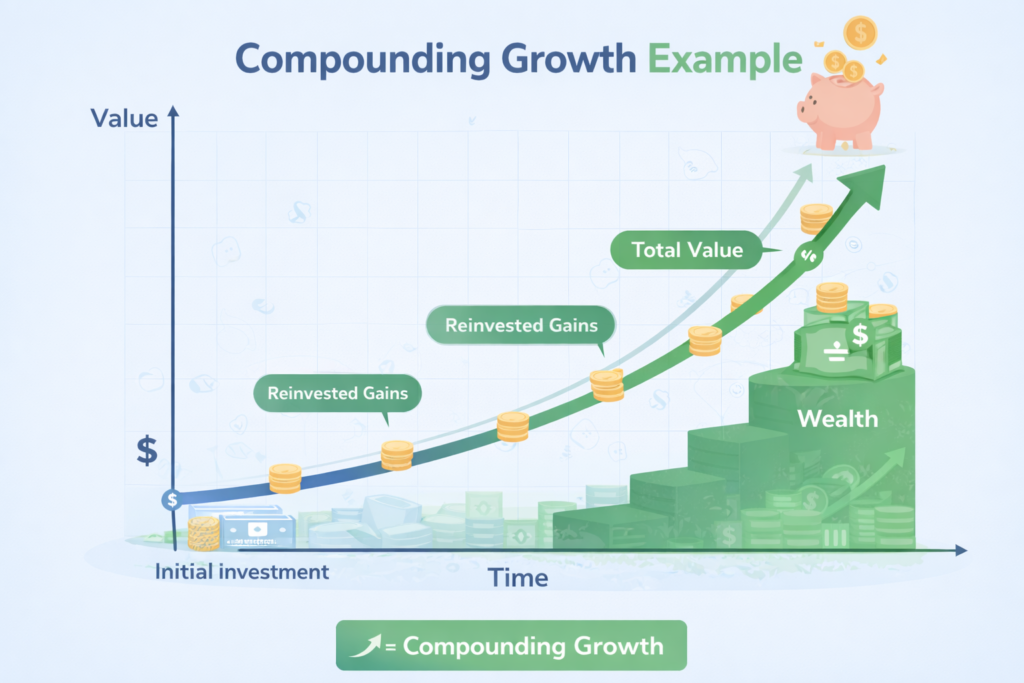
- Miss decades of compounding.
The result is a retirement shortfall and financial insecurity later in life.
Real-World Example
A family delays investing from age 30 to age 40.
To reach the same retirement goal, they must now contribute twice as much each month.
This is because compounding is most powerful when money has time.
Psychological Traps Behind This Mistake
- Loss aversion: Fear of losing money is stronger than desire to gain.
- Complexity avoidance: Investing feels complicated and intimidating.
- Market crash trauma: Past downturns create emotional scars.
- Overanalysis paralysis.
How to Fix It
- Start investing immediately—even small amounts.
- Use low-cost index funds.
- Automate contributions.
- Understand that time in the market beats timing the market.
Mistake #7: Financial Mistakes Middle-Class Families Make – Failing to Plan for Healthcare and Aging
❌ The Mistake Explained in Detail
Healthcare is one of the largest and most unpredictable expenses in retirement.
Middle-class families often:
- Underestimate healthcare costs.
- Assume insurance covers everything.
- Ignore long-term care.
- Avoid planning for aging parents.
Real-World Example
A couple retires with $800,000 but faces:
- $300,000+ in healthcare expenses.
- Long-term care not covered by insurance.
- Out-of-pocket costs draining savings rapidly.
Psychological Traps Behind This Mistake
- Future discounting: Aging feels far away.
- Complexity avoidance.
- Cultural discomfort discussing illness and decline.
- Overconfidence in insurance systems.
How to Fix It
- Maximize health savings accounts (HSAs) where available.
- Understand insurance limitations.
- Plan for long-term care costs.
- Include healthcare inflation in retirement projections.
Mistake #8: Biggest Money Mistakes Middle-Class Families Make – Not Having a Financial System—Just Reactions
❌ The Mistake Explained in Detail
Most families operate reactively:
- They pay bills as they arrive.
- They respond to emergencies.
- They spend based on emotion.
- They save only when something is left over.
This creates constant stress and financial instability.
Real-World Example
No budget.
No savings goals.
No investment plan.
Money comes in → money goes out → stress remains.
Psychological Traps Behind This Mistake
- Avoidance: Money feels overwhelming.
- Time scarcity.
- Emotional fatigue.
- Lack of financial education.
How to Fix It
- Create a zero-based budget.
- Automate savings and investments.
- Track net worth quarterly.
- Hold monthly family finance meetings.
Mistake #9: Biggest Money Mistakes Middle-Class Families Make – Ignoring Tax Optimization
❌ The Mistake Explained in Detail
Tax strategies recommended by the Internal Revenue Service can help families legally reduce their tax burden and improve long-term financial outcomes. Taxes are often a family’s largest expense—yet many households ignore opportunities to legally reduce them.
Middle-class families often:
- Overpay taxes.
- Miss deductions and credits.
- Fail to use tax-advantaged accounts.
- Ignore tax-efficient investing.
Real-World Example
A family could save $4,000/year through:
- Retirement account deductions.
- Child tax credits.
- Education credits.
- HSA/FSA usage.
But they don’t—because they don’t know or don’t act.
Psychological Traps Behind This Mistake
- Tax complexity intimidation.
- Assumption that “it is what it is.”
- Procrastination.
How to Fix It
- Use tax-advantaged accounts fully.
- Consult a tax professional annually.
- Learn the difference between credits and deductions.
- Plan taxes proactively—not just file them.
Mistake #10: Biggest Money Mistakes Middle-Class Families Make – Delaying Financial Education
❌ The Mistake Explained in Detail
Many middle-class families:
- Avoid learning about money.
- Outsource decisions.
- Follow misinformation.
- Operate on assumptions.
This creates vulnerability to scams, bad advice, and poor decisions.
Real-World Example
A family follows viral investment trends, buys speculative assets, loses money, and becomes more fearful—reinforcing avoidance.
Psychological Traps Behind This Mistake
- Finance intimidation.
- Fear of making mistakes.
- Overwhelm from information overload.
- False belief that finance is only for experts.
How to Fix It
- Read one finance book per month.
- Follow credible financial educators.
- Learn fundamentals before strategies.
- Treat financial education like career development.
Mistake #11: Biggest Money Mistakes Middle-Class Families Make – Overinsuring in the Wrong Areas and Underinsuring in the Right Ones
❌ The Mistake Explained in Detail
Families often:
- Overpay for low-value warranties.
- Underinsure catastrophic risks.
- Misallocate insurance dollars.
Real-World Example
A family spends $400/year on warranties but has no disability insurance. One injury later, income collapses—with no protection.
Psychological Traps Behind This Mistake
- Sales pressure.
- Risk misunderstanding.
- Emotional decision-making.
How to Fix It
- Prioritize:
- Health insurance
- Disability insurance
- Term life insurance
- Liability coverage
- Skip extended warranties.
- Insure catastrophic risk—not minor inconveniences.
Mistake #12: Biggest Money Mistakes Middle-Class Families Make – Failing to Teach Children Financial Literacy
❌ The Mistake Explained in Detail
Many parents:
- Avoid money discussions.
- Feel unqualified to teach finance.
- Model financial stress instead of strategy.
Children then grow up repeating the same mistakes.
Real-World Example
Children become:
- Credit-dependent.
- Financially anxious.
- Unprepared for adulthood.
- Vulnerable to debt and financial instability.
Psychological Traps Behind This Mistake
- Cultural taboo.
- Fear of burdening children.
- Parental insecurity.
How to Fix It
- Teach:
- Earning
- Saving
- Spending
- Giving
- Use allowances tied to goals.
- Open custodial investment accounts.
- Model healthy money behavior.
Mistake #13: Biggest Money Mistakes Middle-Class Families Make – Believing “We’ll Fix It Later”
❌ The Mistake Explained in Detail
Procrastination is one of the most expensive financial behaviors.
“I’ll start saving next year.”
“I’ll invest when I earn more.”
“I’ll fix debt when life calms down.”
Later often becomes never.
Real-World Example
A 10-year delay in investing can cost hundreds of thousands in lost compound growth.
Psychological Traps Behind This Mistake
- Present bias.
- Optimism bias.
- Overwhelm.
- Fear of discomfort.
How to Fix It
- Start now—even imperfectly.
- Automate financial actions.
- Focus on progress, not perfection.
- Treat time as your most valuable asset.
Mistake #14: Biggest Money Mistakes Middle-Class Families Make – Relying on One Income Stream
❌ The Mistake Explained in Detail
Many families depend on:
- One employer.
- One paycheck.
- One income stream.
This creates extreme vulnerability.
Real-World Example
One job loss leads to:
- Immediate cash flow crisis.
- Loss of health insurance.
- Emergency debt.
- Emotional distress.
Psychological Traps Behind This Mistake
- Time scarcity.
- Energy depletion.
- Risk aversion.
- Cultural normalization of single income.
How to Fix It
- Build a side income stream.
- Invest for passive income.
- Develop high-income skills.
- Diversify income just like investments.
Mistake #15: Biggest Money Mistakes Middle-Class Families Make – Not Aligning Money With Values
❌ The Mistake Explained in Detail
Many families:
- Spend without intention.
- Save without purpose.
- Work without clarity.
- Accumulate without meaning.
This leads to burnout, dissatisfaction, and financial emptiness.
Real-World Example
A family earns well but feels stressed and unfulfilled because their money doesn’t reflect what they truly value.
Psychological Traps Behind This Mistake
- Cultural scripts.
- Consumerism.
- Lack of reflection.
- External expectations.
How to Fix It
- Define your financial values:
- Freedom
- Security
- Family
- Legacy
- Align spending and saving with those values.
- Design your life—not just your budget.
The Middle-Class Wealth Recovery Plan
🔹 Step 1: Stabilize
- Build a $1,000 starter emergency fund.
- Stop high-interest debt accumulation.
- Create a basic budget.
🔹 Step 2: Strengthen
- Eliminate consumer debt.
- Build a 3–6 month emergency fund.
- Optimize insurance coverage.
🔹 Step 3: Grow
- Maximize retirement accounts.
- Invest in low-cost index funds.
- Increase savings rate to 20–30%.
🔹 Step 4: Multiply
- Build side income.
- Invest beyond retirement.
- Create long-term wealth strategies.
🔹 Step 5: Legacy
- Estate planning.
- Teaching children financial literacy.
- Charitable giving.
- Generational wealth building.
Why This Matters More in Tier-1 Countries
In Tier-1 countries:
- Social safety nets are shrinking.
- Healthcare costs are rising.
- Pensions are disappearing.
- Inflation erodes purchasing power.
- Longevity increases retirement needs.
The old model:
“Work hard, buy a house, retire comfortably.”
No longer works automatically.
Wealth now requires:
- Intention.
- Education.
- Systems.
- Early action.
Final Thoughts: Middle-Class Doesn’t Mean Financially Stuck
Middle-class families are not failing.
They are navigating:
- A broken financial system.
- An inflationary economy.
- A consumer-driven culture.
- A financial education gap.
The solution is not more hustle.
The solution is:
- Better systems.
- Smarter decisions.
- Earlier action.
You don’t need:
- A massive income.
- Perfect timing.
- Advanced math skills.
You need:
- Awareness.
- Consistency.
- Patience.
- A plan.
And most importantly—you need to start.How to Save $10,000 a Year Without Sacrificing Your Lifestyle (2026 Guide)Improve Credit Score Fast (Legally & Safely) – 2026 Ultimate Guide